


Weaving Around Your Product Requirements
Veltrion Webbings manufactures narrow woven webbing for importers, textile distributors, bag and outdoor brands, and industrial product manufacturers. This production stage turns prepared yarn into the construction specified for your handles, straps or sewn textile components.
Before weaving, we review material composition, width, thickness, weave, color and intended use. These details influence appearance, hand feel and how the webbing behaves during sewing or threading through hardware.
A reference sample helps define the desired result. For an accurate quotation and meaningful sample review, also provide dimensional tolerances and any performance criteria that affect your application.
 Confirming Width, Thickness and Weave
Width and thickness should be considered together with weave and yarn selection. A thicker construction may change foldability, sewing layers or buckle clearance. Similar-looking webbing can handle differently when the yarn or weave changes.
Specify the required plain, twill, herringbone or other construction, supported by a physical reference where possible. Confirm whether the sample needs a softer hand, a firmer structure or a particular face and reverse appearance.
Our width, thickness and weave customization review helps establish these requirements before the weaving setup is confirmed. A material name or product photograph alone may leave important construction details unresolved.
Preparing Yarn and Setting Up the Loom
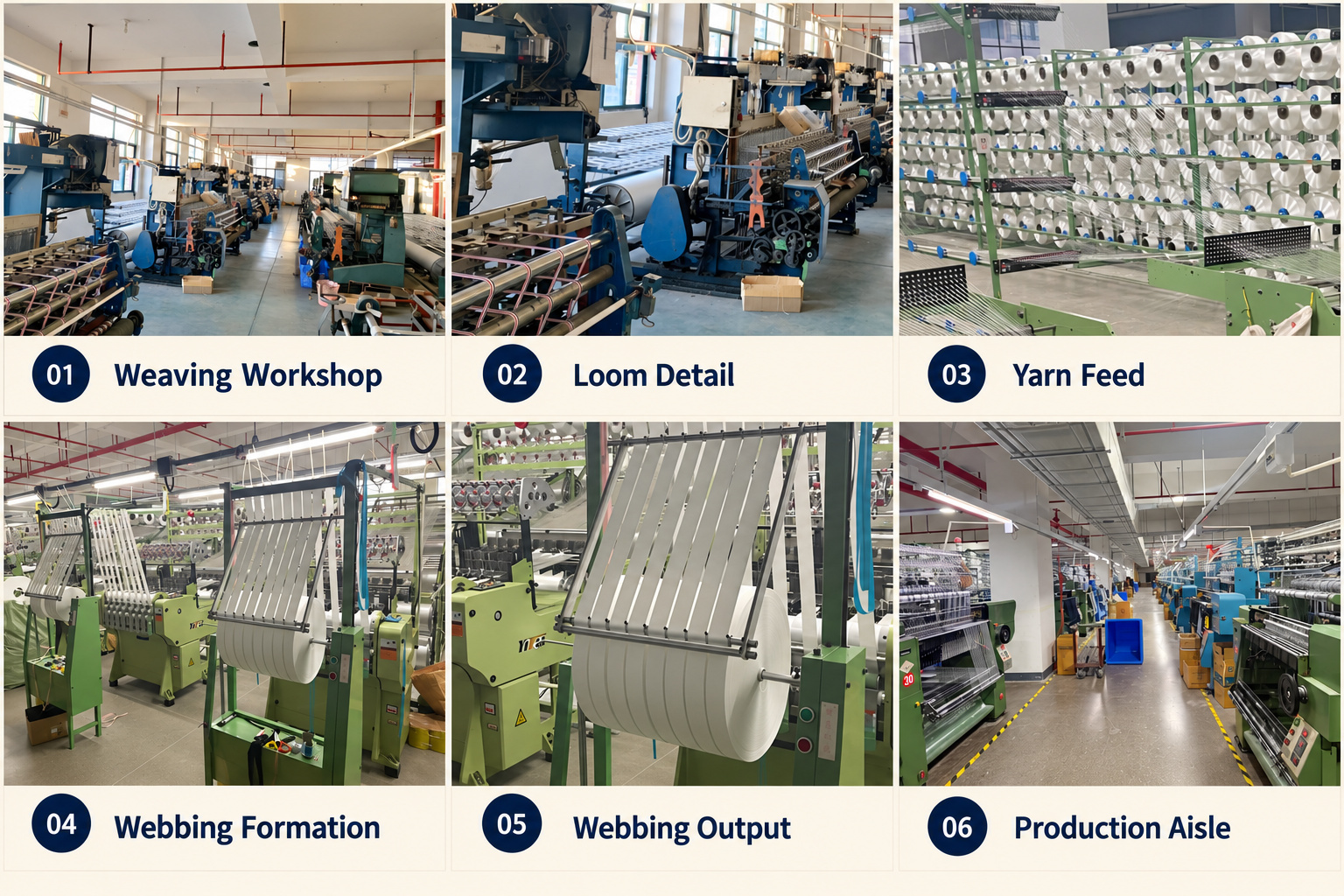
The weaving setup follows the selected yarn arrangement and construction. Prepared warp yarns feed into the loom, where they interlace with the weft to form the narrow fabric.
Yarn feeding, tension and threading arrangement influence production consistency. Setup changes may be needed when the order uses a different width, material, weave or color arrangement. These changes can affect development time and the practical minimum quantity.
The preceding yarn preparation and warping stage establishes the yarn supply for weaving. Jacquard patterns and elastic constructions require their corresponding production route and sample review.
Checking Edges and Woven Appearance
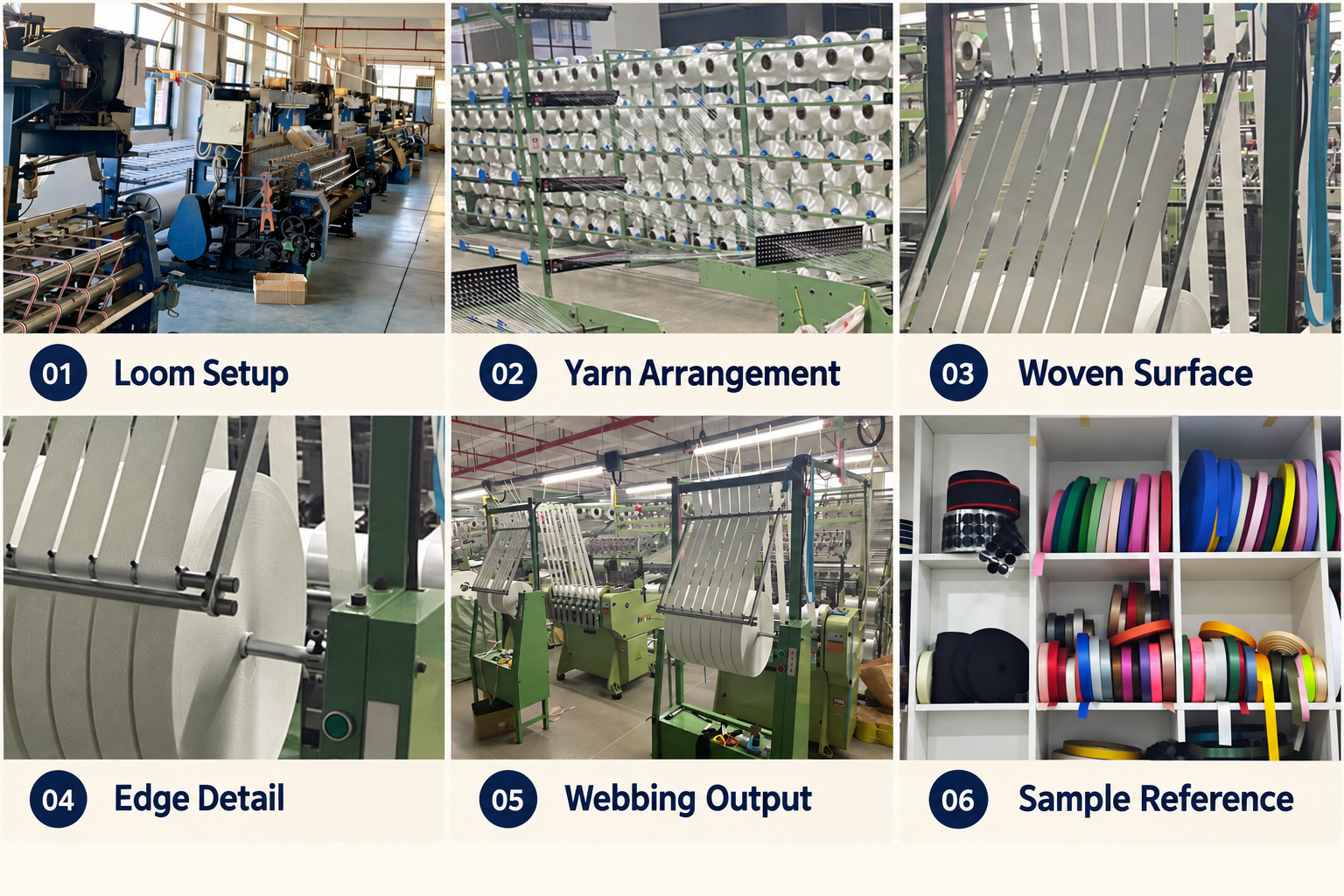
During production, checks focus on dimensions, edges and visible weaving defects against the confirmed requirements. Relevant observations include uneven edges, broken yarns, irregular weave and differences in surface appearance.
For striped or patterned constructions, confirm color arrangement and the appearance required on each side. Any subsequent dyeing, printing or finishing must also be considered when evaluating the finished sample.
Required tolerances and defect acceptance criteria should be agreed before bulk production. Finished-product strength or elongation targets need defined test methods; visual weaving checks do not establish those results.
 Sample Review Before Bulk Weaving
Evaluate the development sample for width, thickness, weave, hand feel, color and edge appearance. Test it with the intended sewing arrangement or buckle where fit matters.
Record requested changes before approval. The confirmed specification and approved sample establish the production reference. Additional testing can be reviewed through webbing inspection and testing.
Information Needed for a Quotation
Send material composition, dimensions, weave, colors and meters per item/color. Include the application, reference sample, tolerances and any required test method.
Standard orders usually start from 500–1,000 meters per item/color; special materials or constructions may require higher quantities. Also confirm roll length, splice limits, labels, packing and destination. We review these details before confirming feasible options, MOQ and production timing.