


Production Around Your Application
Veltrion Webbings manufactures elastic webbing for apparel and textile assemblies. We support garment manufacturers, brands, importers and textile distributors sourcing components for sewing and bulk supply.
Before sampling, we review width, construction, full yarn composition, color and intended use. Stretch and recovery expectations also need clear conditions so the development sample can be evaluated consistently.
Explain how the webbing will be attached, extended and used in the finished product. A waistband, sewn support component or adjustable textile assembly may require a different construction even when the requested width looks similar.
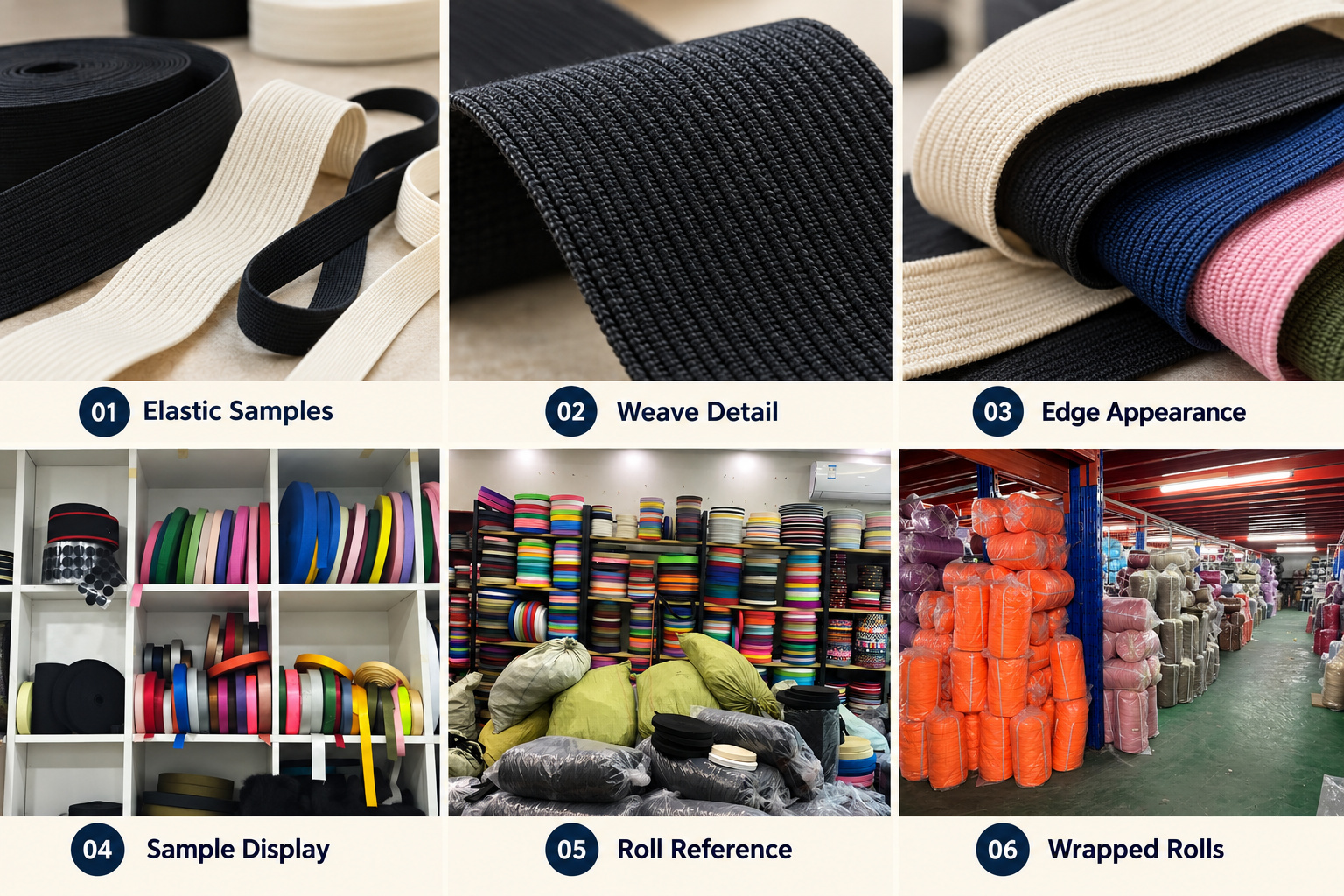 Confirming Yarn Composition and Construction
Elastic webbing combines elastic yarns with other yarns selected for the proposed construction. Confirm the full composition rather than identifying the product only as polyester, PP or nylon.
The yarn combination and weave influence hand feel, surface appearance and how the webbing extends. Width and thickness also affect sewing layers, folds and component fit. If replacing an existing product, send a physical sample with the available specification and explain which characteristics must be retained.
Our material and yarn selection review helps establish the construction to develop before production requirements are confirmed.
Defining Stretch and Recovery Requirements
“High stretch” or “strong elastic” is insufficient for sample approval. State the required extension, the conditions used to evaluate it and the expected recovery after release.
Where performance matters, provide the test method, loading conditions, number of cycles and acceptance criteria applicable to your project. If these are not yet defined, explain the application so the evaluation requirements can be discussed before sampling.
Width and thickness should also have an agreed measurement condition. Comparing a relaxed sample with one under tension can produce inconsistent conclusions.
Weaving and Reviewing the Development Sample
Elastic yarn feeding and tension need to suit the selected construction. The weaving setup must produce the required appearance and extension behavior together.
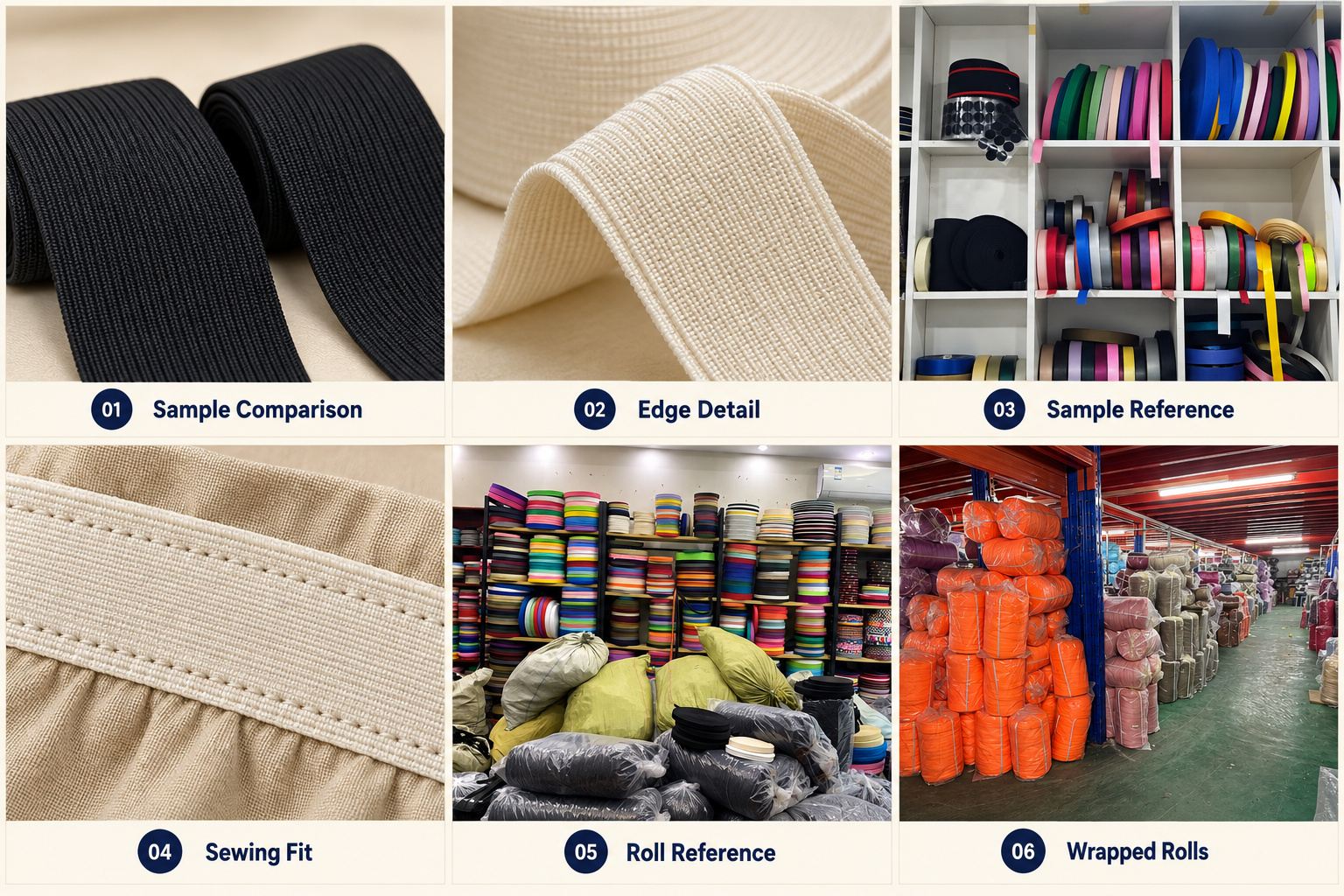
Review the finished sample in its relaxed condition and under the agreed evaluation conditions. Check width, thickness, edges, hand feel and appearance, then assess stretch and recovery as specified.
Also trial the sample with your sewing arrangement. Stitching, folds and attachment details can influence how the finished component extends. Record requested changes before sample development and approval is completed.
 Production Checks and Additional Testing
Checks cover material details, dimensions, visible weaving defects, edges, colors and the agreed finished-product requirements. Stretch and recovery evaluation must follow the confirmed conditions.
If the webbing will be washed or undergo further processing, identify those requirements before ordering. Color fastness, dimensional stability and other requested testing need an agreed method and acceptance criteria. Review the scope through webbing inspection and testing before confirming production.
MOQ, Packing and Quotation Details
Standard webbing orders usually start from 500–1,000 meters per item/color. Special yarns or custom elastic constructions may require higher quantities.
Send composition, width, thickness, color, meters per item/color, application and stretch or recovery requirements. Include a reference sample where available.
Confirm roll length and how it should be measured, along with splice limits, labels and packing. Provide the destination and target schedule so we can review MOQ, sample arrangements, production timing and shipping requirements with your quotation.