


Preparing Webbing for Your Assembly
Veltrion Webbings supports cutting and finishing requirements for bag, apparel, outdoor and industrial textile components. The work required depends on whether you purchase continuous rolls or pieces prepared for further assembly.
Before quotation, confirm material composition, width, thickness, finished length and intended use. Include the cutting shape, end appearance and any subsequent folding, sewing or hardware attachment.
A reference piece helps define the result. Drawings and measurable requirements are also needed where length, shape or decoration placement affects assembly. Roll orders should identify any finishing requirements separately from cutting.
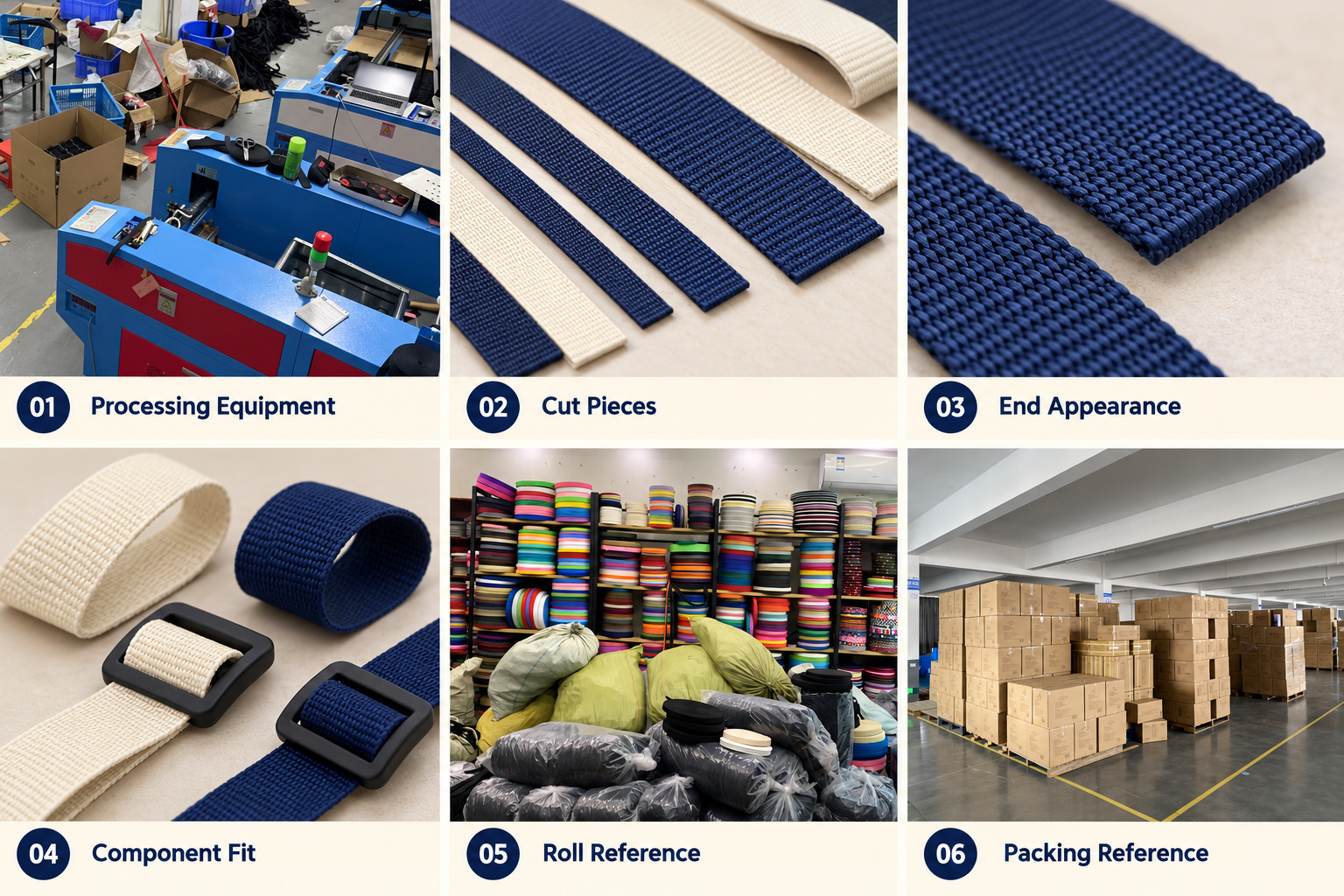 Confirming Cut Length and Shape
Specify the required finished length and tolerance, together with the condition used for measurement. Elastic webbing needs an agreed relaxed or tensioned condition so samples and bulk pieces are compared consistently.
Confirm straight or shaped ends and identify any folding allowance. If your drawing shows the assembled component, distinguish its finished dimensions from the length of webbing required before sewing.
For printed or jacquard pieces, explain where the design should appear after cutting and assembly. Fixed logo placement needs review alongside the pattern repeat and cut length. Our logo and printing customization review helps settle those details before sampling.
Selecting an Appropriate End Treatment
End treatment must suit the material and application. Cotton and synthetic constructions do not respond identically, so the proposed cutting and edge finish are reviewed against the actual webbing.
State whether the ends remain visible, are enclosed in a seam or sit against another component. A treatment that limits fraying may also change end stiffness or appearance. Samples should be checked for any hard edge, discoloration or excessive buildup that could affect use.
If you have an existing approved component, send it with the base specification. We review the feasible treatment rather than assuming one cutting method fits every material.
Reviewing Folds, Sewing and Hardware Fit
Finishing requirements may include preparing the cut piece for a specified fold or assembly arrangement. Confirm the required hand feel and appearance after processing, especially where multiple layers pass through a buckle or enter a seam.
Evaluate development pieces with the intended hardware and sewing setup. Review cut length, end appearance, fold behavior and artwork position together.
Record revisions through sample development and approval before bulk processing. Changes to the construction, cut shape or end treatment may affect cost, MOQ and timing.
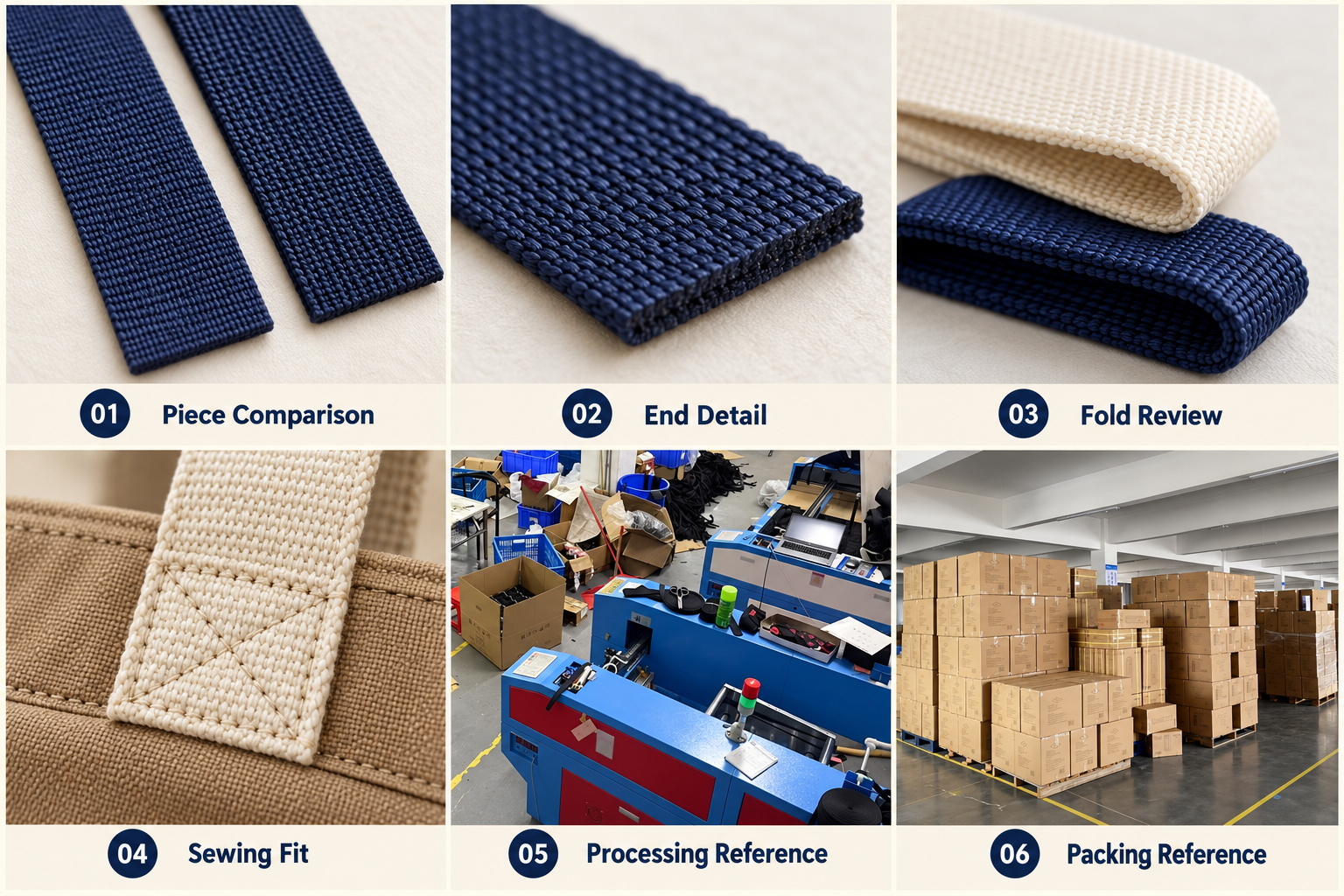 Checks Before Packing
Checks cover finished dimensions, cut shape, visible end defects and the agreed appearance requirements. Printed or woven designs also need placement and orientation review where specified.
For elastic pieces, measurement follows the confirmed conditions. Additional strength, washing or other performance requirements need defined test methods and acceptance criteria; appearance checks alone do not establish those results.
See webbing inspection and testing to define the required inspection scope before production.
Quotation and Delivery Requirements
Provide quantity per item/color, dimensions, material, drawings, reference pieces and finishing requirements. State whether quantities are quoted in pieces or meters, including any breakdown by cut length.
The standard webbing MOQ of 500–1,000 meters per item/color is a starting point for review. Cut-component minimums are confirmed from material usage, setup and processing requirements.
Confirm pieces per bag or bundle, labels, protection and carton requirements. Include the destination and target schedule so sampling, bulk processing and shipment arrangements can be reviewed with your quotation.