


Printing Around the Finished Application
Veltrion Webbings supplies printed webbing for bag and outdoor brands, promotional product buyers, textile distributors and manufacturers sourcing branded components.
Before sampling, we review the base material, width, thickness, weave, artwork and intended use. A logo on a continuous roll requires different placement decisions from a design intended for a cut strap or sewn handle.
Explain how the webbing will be cut, folded, stitched or threaded through hardware. These details help establish the visible print area and identify where a logo could be hidden during assembly.
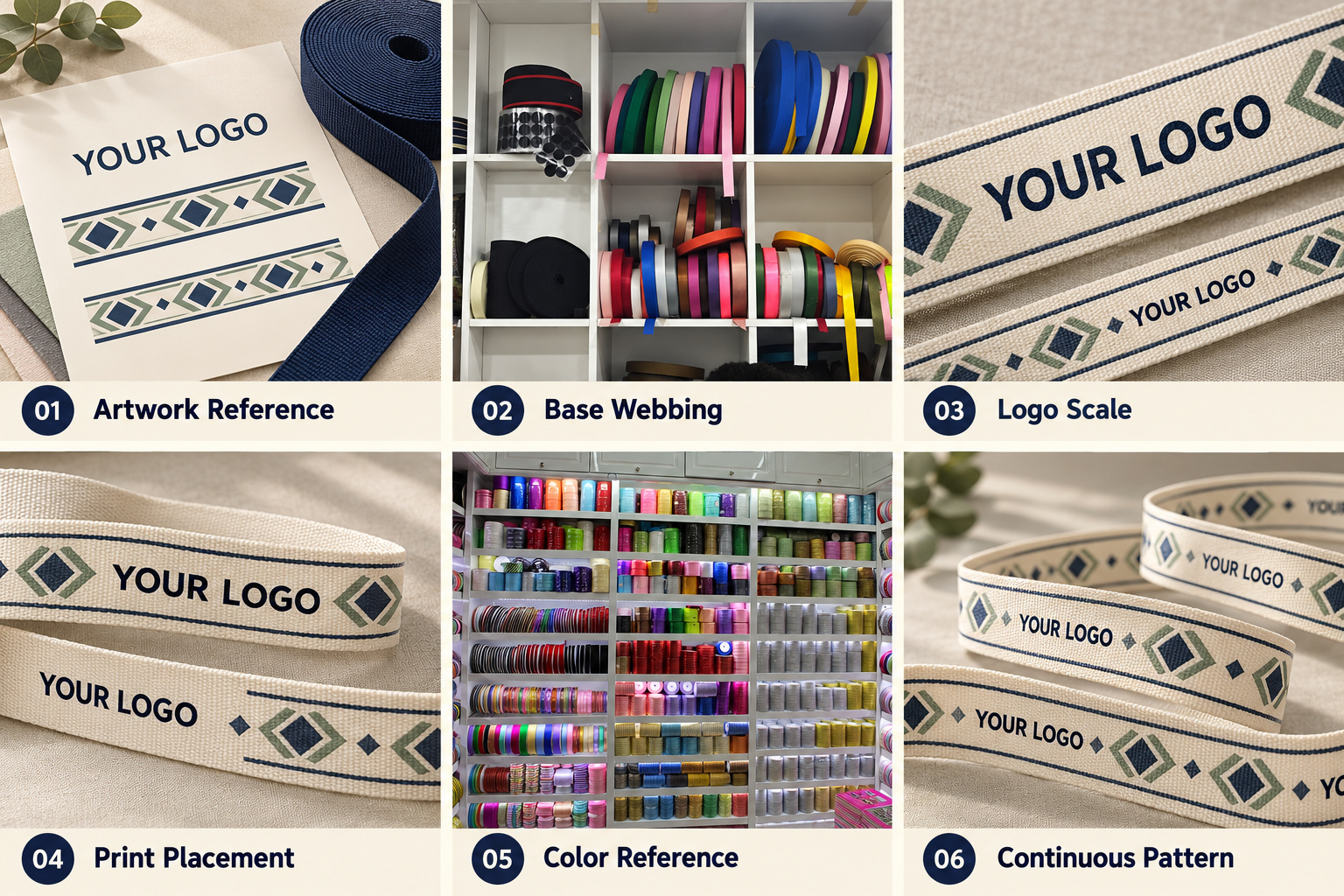 Selecting the Base Webbing
Material and surface construction affect how printed details appear. A textured weave may interrupt fine lettering or small graphic elements, while the base color influences the proposed print result.
Confirm composition, weave, width, thickness and the required hand feel before artwork approval. Changing the base webbing after sampling may require another print review.
Send a physical reference if matching an existing component. Our material and yarn selection review helps establish the base construction before the printing approach is confirmed.
Confirming Artwork, Direction and Repeat
Provide a clear artwork file with the intended dimensions, colors, orientation and repeat arrangement. Identify whether the design appears on one side or both sides.
For continuous printing, confirm spacing between repeated elements and whether the design should read in one direction. For cut components, provide the finished length, sewing allowance and required logo position. Fixed placement within each piece needs review alongside cutting requirements.
Small lettering, narrow lines and complex color details are assessed against the proposed base and printing approach. The logo and printing customization review establishes feasible artwork details before development.
Approving the Printed Sample
Review print clarity, color, scale, placement, direction and repeat on the actual webbing. Evaluate the sample in its intended configuration, including folds, seams or hardware where relevant.
A screen preview cannot establish the finished print appearance. Approve the physical sample and record any requested changes before bulk production.
Samples using existing styles and standard materials normally take 5–10 working days; custom development usually takes 10–20. Sample charges and delivery arrangements are confirmed for the request. Changes to the base, artwork or print requirements may affect timing.
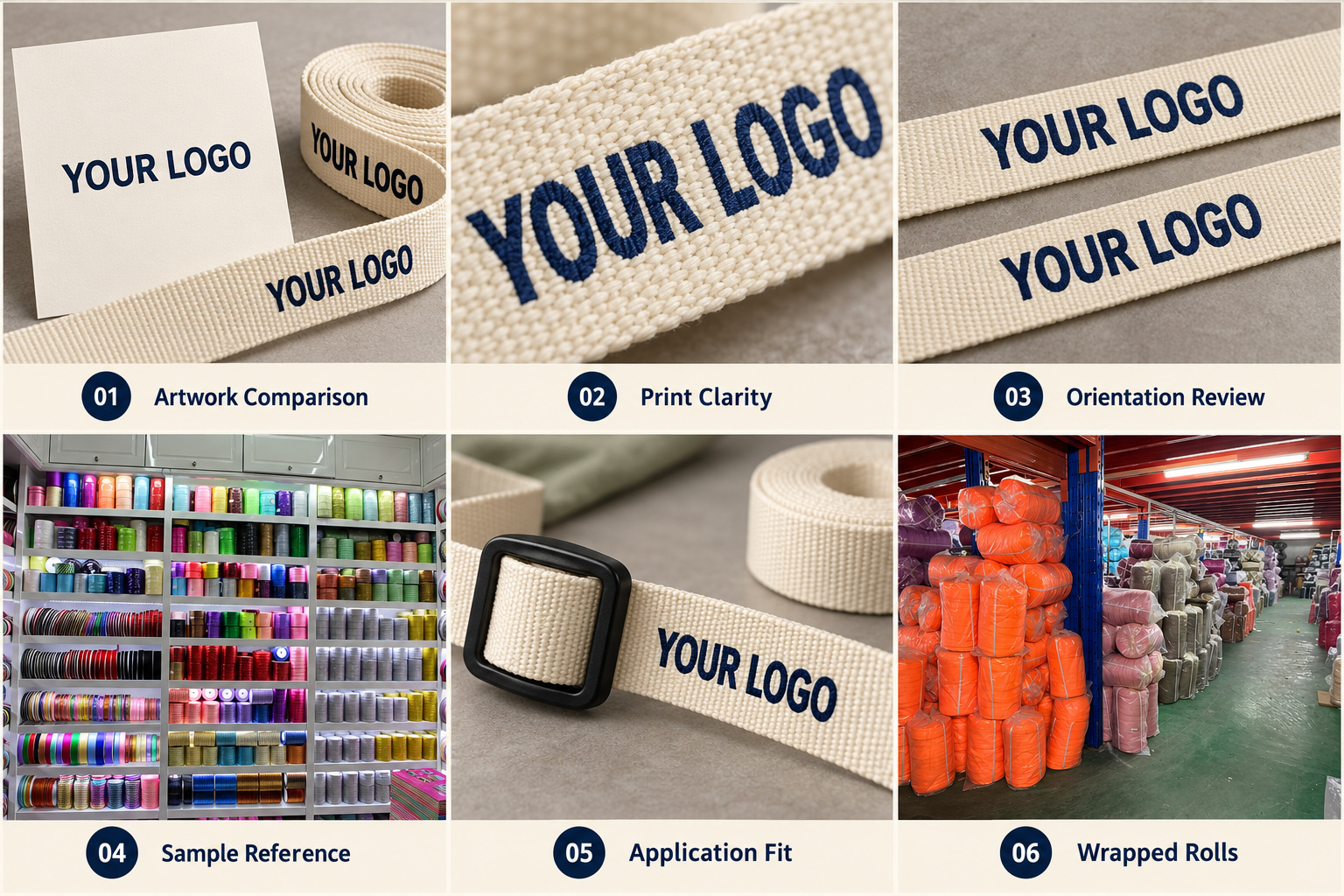 Print Checks and Testing Requirements
Production checks compare printed appearance with the approved sample and confirmed specification. Relevant points include visible print defects, placement, orientation, repeat and color appearance.
Specify any washing or rubbing color fastness requirements before ordering, including the test method and acceptance criteria. Visual approval alone does not establish print durability.
Additional testing and third-party inspection can be arranged after scope, timing and cost are reviewed. See webbing inspection and testing for the information needed.
Bulk Orders, Packing and Quotation
Standard webbing orders usually start from 500–1,000 meters per item/color. Custom artwork, special materials or packing requirements may increase the minimum.
Send the base specification, artwork, quantity breakdown and application details. Confirm roll length, splice limits, labels, individual packing or cut-piece requirements.
Standard bulk production normally takes 25–35 working days; complex custom orders may take 35–45 after sample and order requirements are settled. Provide the destination, trade term and target schedule so production and transport arrangements can be reviewed separately.