


Color Requirements Before Production
Veltrion Webbings reviews color requirements for importers, textile distributors, bag and apparel brands, and manufacturers sourcing webbing components. Color development starts with the material, construction and application.
The production route depends on the specification. Color may be established through selected colored yarns or dyeing where suitable; not every webbing order follows the same process. Printed artwork and multicolor jacquard designs also require separate color details.
Send a physical reference where possible, together with composition, width, thickness, weave and quantity per color. Identify whether the webbing must coordinate with fabric, hardware or another supplied component.
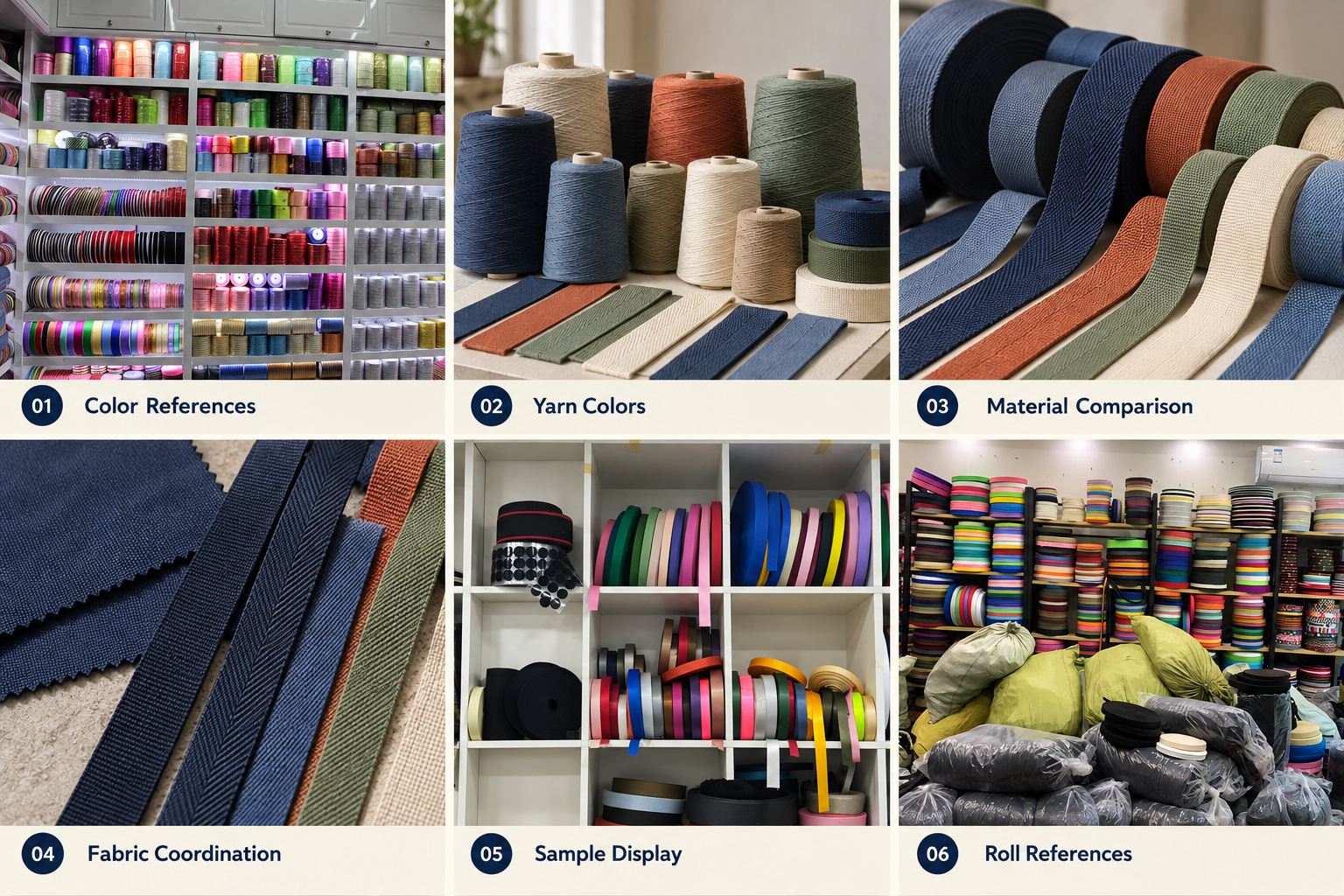 Establishing a Usable Color Reference
A photograph helps communicate direction but may not provide a reliable matching target. Lighting, camera settings and screens can change how a shade appears.
Provide a physical swatch or clearly identified color reference, and confirm which reference takes priority if several are supplied. For repeat orders, identify the previously approved sample and any requested change.
Our color matching review establishes the target before sampling. Agree the viewing conditions and acceptance requirements so the development sample and bulk webbing can be compared consistently.
Material and Weave Affect Color Appearance
Cotton, nylon, polyester, PP and blended constructions can show the same color direction differently. Yarn characteristics, surface texture and weave influence the visible result.
A smooth construction may reflect light differently from a textured weave. Changing composition, thickness or finishing can also change appearance, even when the intended shade remains unchanged.
When matching webbing to bag or garment fabric, submit both references. Confirm whether coordination or a close visual match is required. Avoid approving one construction and then changing its material without reviewing a new sample.
Sample Approval and Bulk Shade Checks
Review development samples in the agreed conditions, alongside the target reference. Confirm material, construction and any finishing at the same time as color.
Record the approved version and requested revisions before bulk production. Our sample development and approval process establishes the reference used for production checks.
Bulk checks compare finished webbing with the agreed color reference and review visible shade differences within the order. If consistency across separate production lots is important, state that requirement before quotation. Numerical color limits require an agreed measurement method and acceptance criteria.
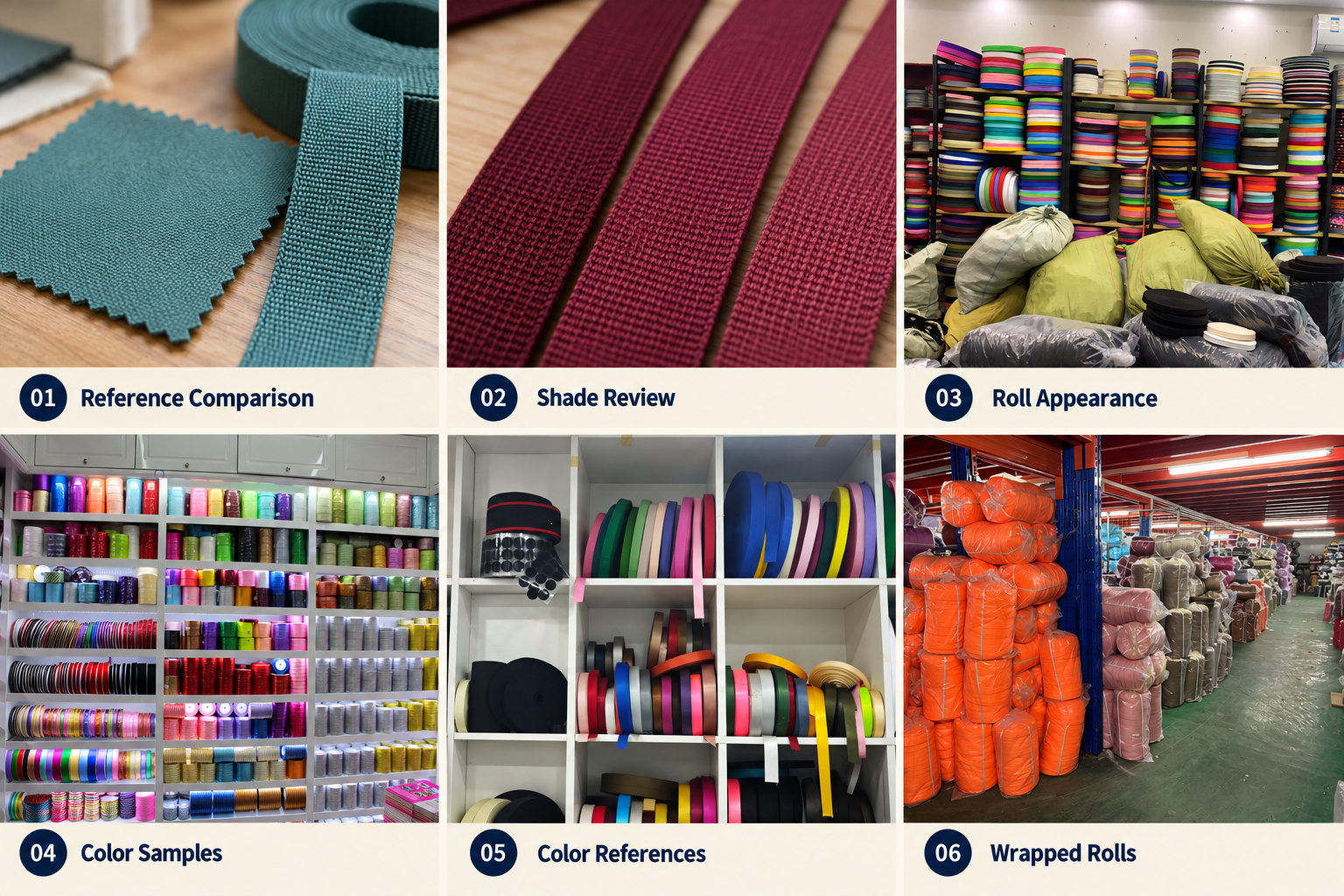 Color Fastness and Processing Requirements
A visual color match does not establish color fastness. Specify any washing, rubbing or other exposure conditions relevant to the finished product, together with the required test method and acceptance criteria.
Also identify subsequent washing, sewing or processing that may affect color or dimensions. Color fastness and dimensional stability testing can be arranged after scope, timing and cost are confirmed. See webbing inspection and testing for the information needed.
Quantity, Packing and Quotation Details
Provide meters per item/color rather than only a total order quantity. Standard orders usually start from 500–1,000 meters per item/color; special materials or development requirements may increase the minimum.
Confirm roll length, splice limits, color identification labels and whether colors should be packed separately. Include the destination and target schedule.
Send the complete specification and reference samples so we can review the color route, sampling requirements, MOQ and bulk production timing before confirming your quotation.