


Develop Webbing Around Product Fit
Veltrion Webbings develops webbing dimensions and constructions for bag brands, outdoor product manufacturers, textile distributors and OEM buyers. Width, thickness and weave are reviewed together so the sample suits your product’s sewing, folding and hardware requirements.
Send your target specifications and explain how the webbing will be used. A reference sample helps communicate appearance and hand feel, while a drawing or component reference identifies the fit requirements. Where specifications are incomplete, we review the application before proposing a construction for sampling.
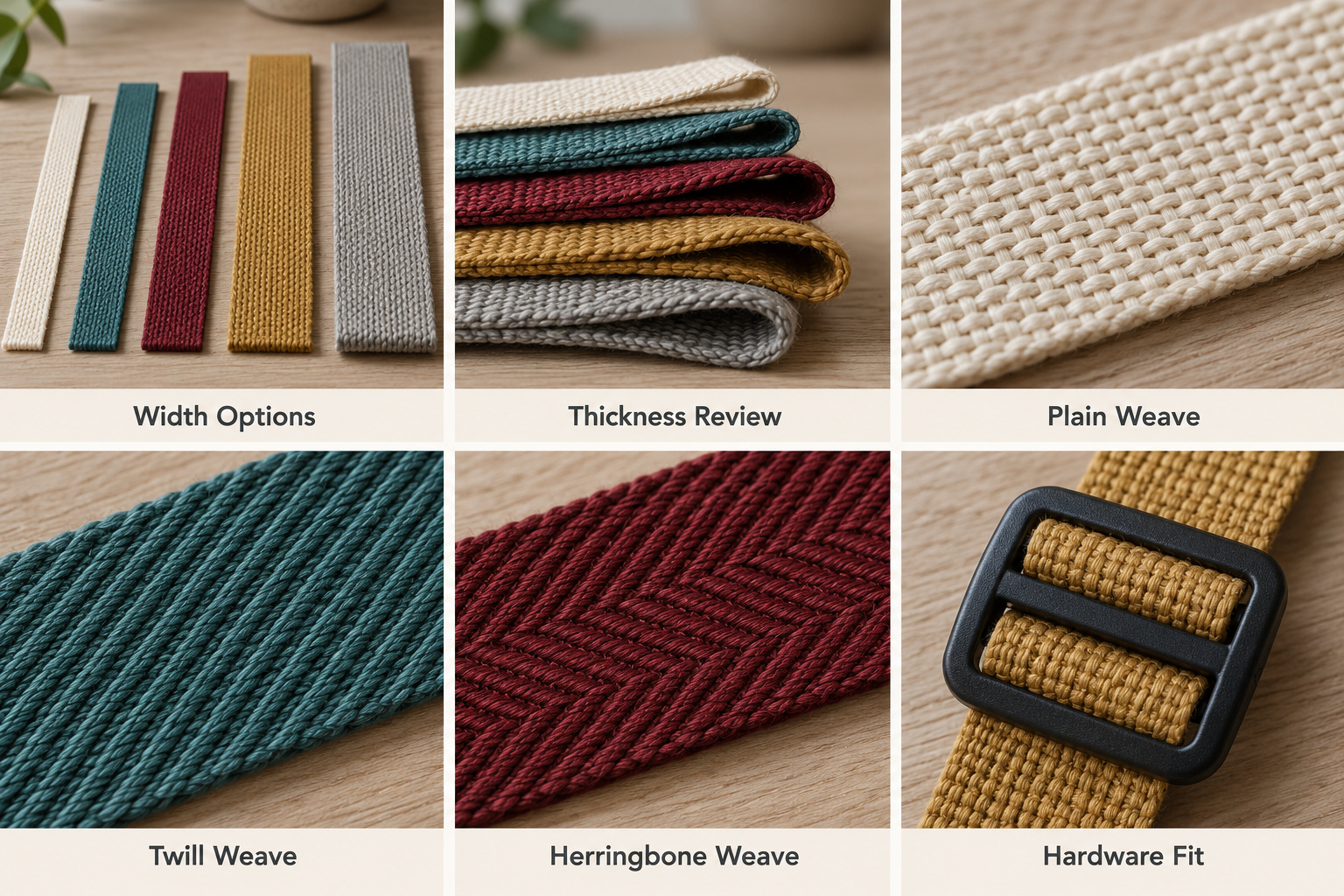 Confirm Width and Hardware Clearance
Specify the finished width and acceptable tolerance rather than relying only on a nominal size. If the webbing passes through a buckle or adjuster, include the relevant opening dimensions or provide the component for review.
The sample should pass through the hardware as intended without unwanted bunching or excessive clearance. Folded sections and sewn overlaps may also affect fit. Confirm whether dimensions are stated in millimeters or inches, particularly when matching an existing overseas specification.
For mixed-width orders, list the quantity required for each width and color. Different constructions may need separate development and MOQ assessment.
Review Thickness and Sewing Requirements
Thickness affects folding, layered seams and clearance through hardware. A visually similar replacement can behave differently during assembly if its construction is thicker, firmer or more compressible.
Tell us how many layers will be sewn together and identify any limits from your production process. We review thickness alongside yarn choice, weave and hand feel. Our material and yarn selection service addresses the composition requirements behind the proposed structure.
Agree the measurement method and conditions where thickness is a controlled specification. Compressible or elastic constructions should be evaluated consistently during sample and bulk inspection.
Select the Weave and Surface Appearance
Plain, twill, herringbone and patterned references can help define the required surface. We review the proposed weave against the selected material, dimensions and intended processing before confirming feasibility.
Provide clear references for the face, reverse and edges. State whether flexibility, surface texture or appearance needs to match an existing product. A weave name alone does not establish strength or elongation; performance targets require defined test conditions.
Changes to construction can also affect color appearance and branding. Include any printing or woven-pattern requirements before the base specification is approved.
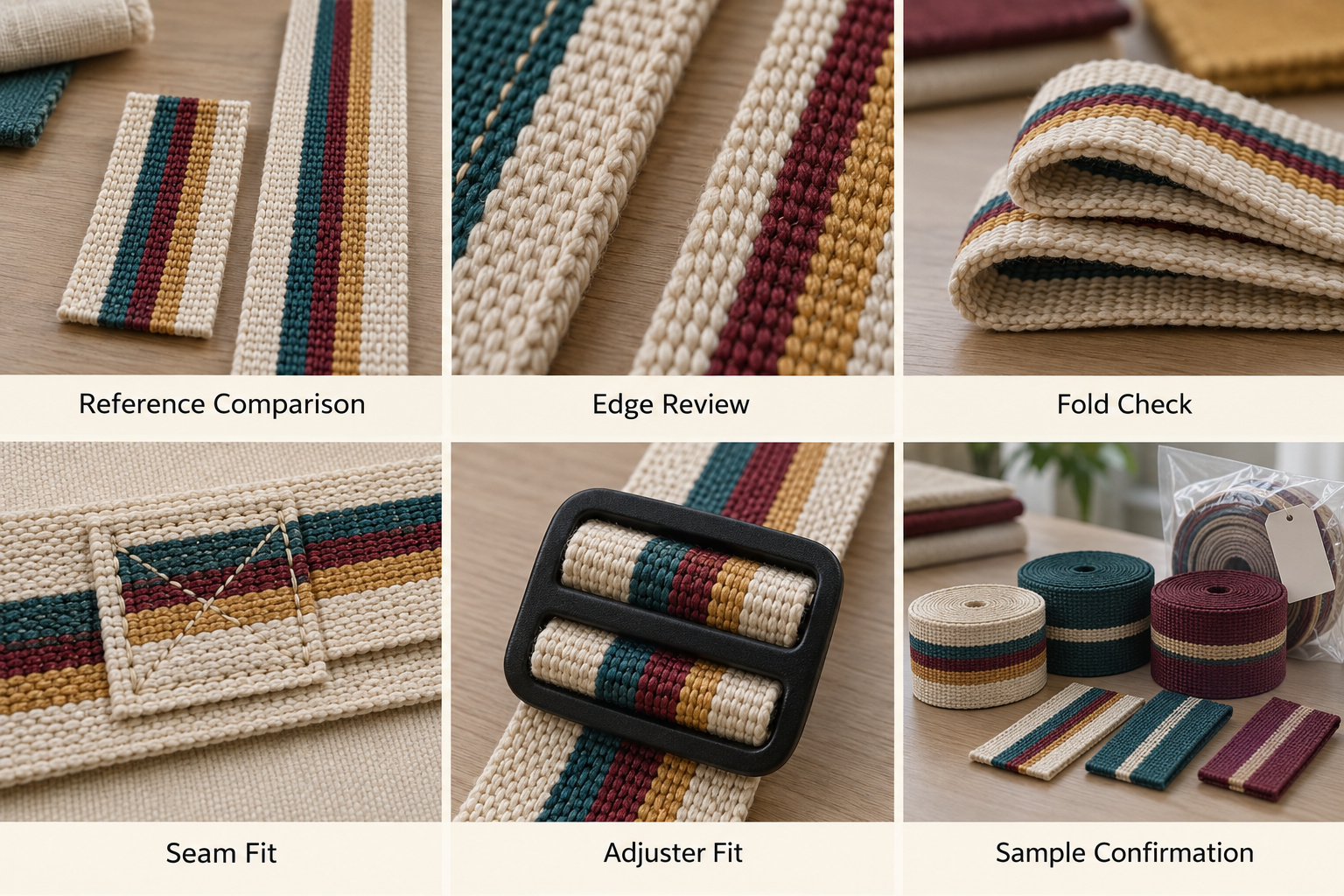 Approve Samples and Inspection Criteria
Review developed samples in your intended assembly process before approving bulk production. Confirm width, thickness, weave, hand feel, edges and component fit through our sample development and approval process.
Existing styles using standard materials normally take 5–10 working days for sampling; custom development usually takes 10–20. Charges and delivery arrangements are confirmed for the request. Agreed tolerances and additional checks should be settled before production and included in the scope of webbing inspection and testing.
Confirm Quantities, Packing and Timing
Standard orders usually start from 500–1,000 meters per item/color. Special constructions or materials may increase the minimum. Width, yarn, weave, processing and quantity breakdown affect the quotation.
Standard bulk production normally takes 25–35 working days; complex custom work may take 35–45 after sample and order requirements are settled. Send roll length, splice limits, packing requirements and destination with your specification. We will confirm feasible options, MOQ and timing, with transport arrangements reviewed separately.