


Select Materials Around the Application
Veltrion Webbings reviews material and yarn requirements for importers, textile distributors, brands and product manufacturers sourcing OEM webbing. Our range includes cotton, polypropylene, nylon, polyester, elastic constructions and blends.
Start with the finished product and how the webbing will be used. Bag handles, adjustable straps and apparel components can require different hand feel, flexibility and construction. Tell us about sewing, hardware contact, washing or outdoor exposure, together with any measurable performance requirements. These details guide material review before sampling.
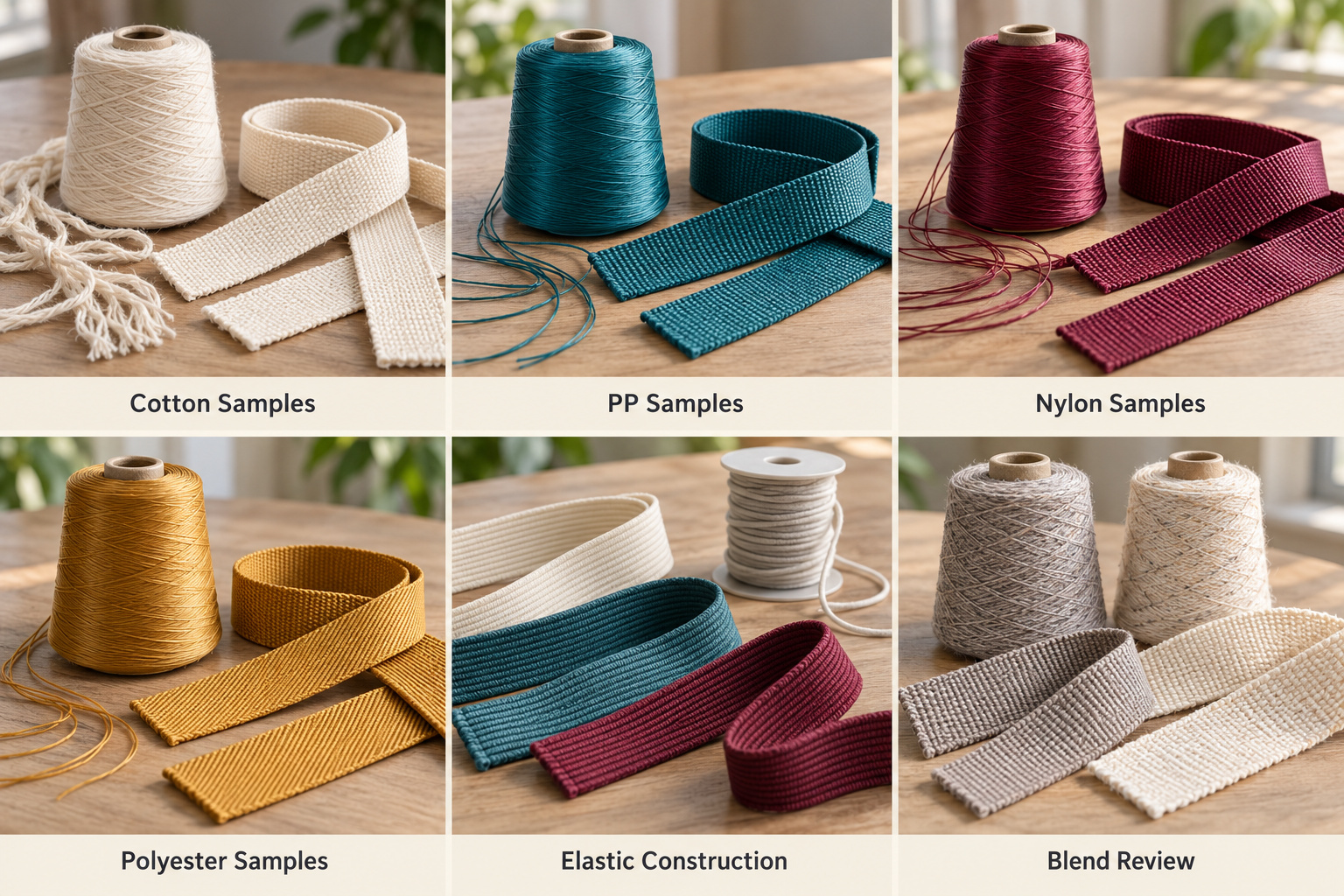 Compare Composition, Construction and Hand Feel
A material name does not fully define the finished webbing. Yarn specification, weave, width and thickness also affect its surface, flexibility and suitability for processing. Compare these details together rather than choosing from color or appearance alone.
For cotton webbing, confirm the actual composition and any washing or dimensional stability requirements. PP, nylon and polyester projects should identify the required construction, hand feel and processing conditions. For elastic webbing, specify the complete yarn composition alongside the expected extension and recovery conditions.
Our width, thickness and weave customization service helps connect material selection with the dimensions and structure needed for your product.
Use Reference Samples to Clarify Requirements
A physical reference can communicate texture, firmness and appearance more clearly than a photograph. If the composition is unknown, identify it as a reference for evaluation rather than assuming an exact material match.
Provide the available specification, intended use and any details that must remain unchanged. Explain whether appearance, component fit or a defined performance target takes priority. We review the proposed material and construction before confirming the development scope.
For color-sensitive projects, include a physical color reference or color code. The selected yarn and weave should be considered during color matching, since the finished surface can influence how a color appears.
Define Testing Before Sample Approval
Strength, elongation, color fastness and dimensional stability requirements need clear acceptance criteria. Send the relevant test method, conditions and target values before ordering so production suitability and verification arrangements can be reviewed.
For elastic constructions, state how extension and recovery will be evaluated. For specified-standard inquiries, include the standard number and revision. We assess the requirements before confirming the supply scope; selecting a particular fiber does not establish compliance by itself.
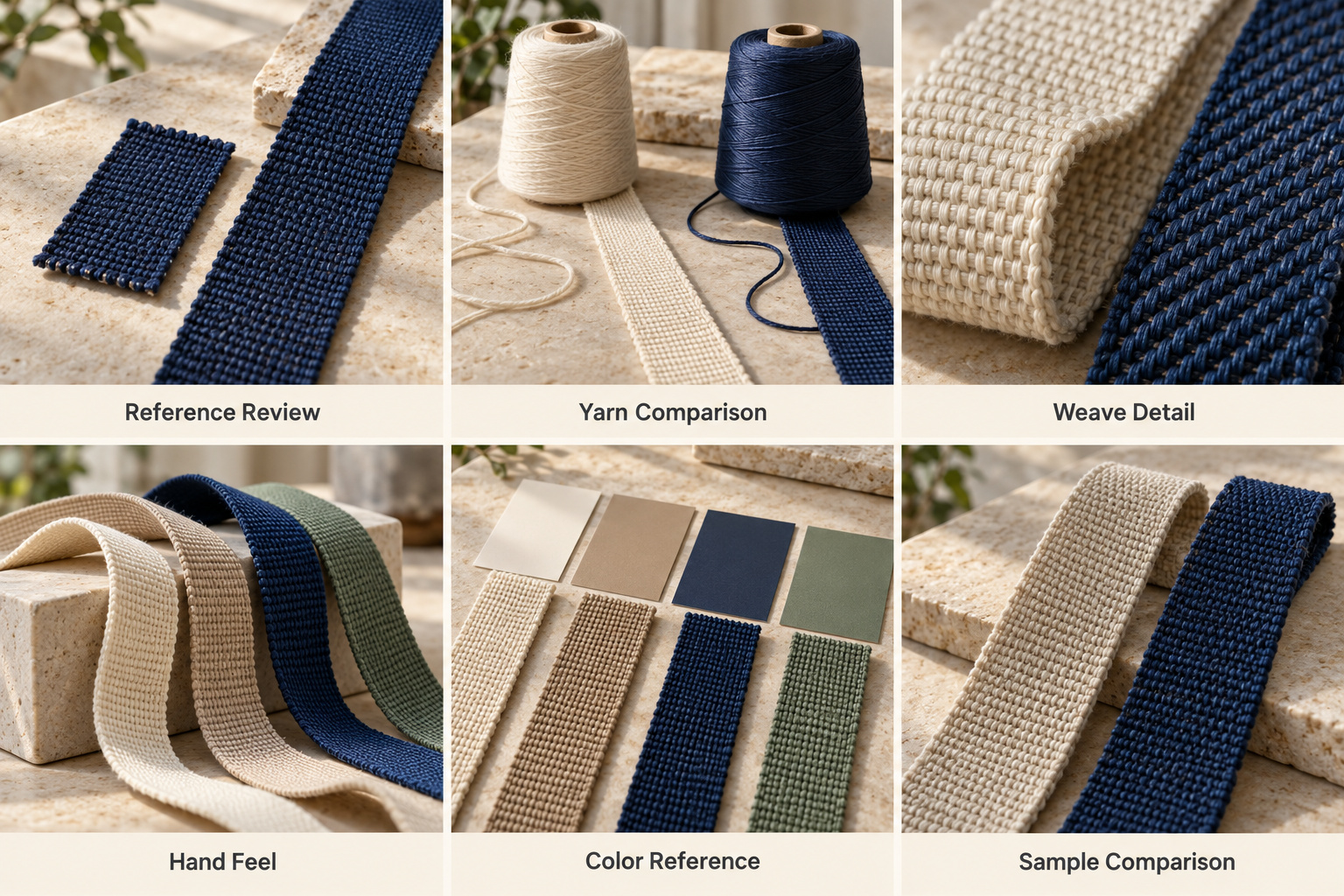 Confirm Samples, MOQ and Production Timing
Existing styles using standard materials normally take 5–10 working days for sampling. Custom development usually takes 10–20 working days, with charges and delivery arrangements confirmed for the request. Through sample development and approval, buyers review composition, dimensions, hand feel, color and agreed performance requirements before bulk production.
Standard orders usually start from 500–1,000 meters per item/color. Special materials and constructions may require higher quantities. Standard bulk production normally takes 25–35 working days; complex custom work may take 35–45, after sample and order requirements are settled.
Send the Details Needed for Material Review
Send your application, target composition, width, thickness, weave, quantity per color and reference sample. Add processing conditions, testing requirements, roll length, packing format and destination. We will review feasible material options and confirm sampling, MOQ and timing before production arrangements are agreed.